We say we want freedom. We celebrate it, fight for it, build monuments to it. The American story is a story about liberty: throwing off kings, writing constitutions, expanding rights. Freedom is the thing we’re supposed to want more of, always.
But when freedom actually arrives, when no one is telling us what to believe, who to be, what our lives should mean, something else sets in. A weight. An anxiety that’s hard to name.
Most people, if you asked them, would say they want to make their own choices. But watch what happens when the choices multiply. When the authorities disagree. When the institutions that used to settle questions (church, party, tradition, expertise) fracture into competing camps, each claiming legitimacy, none commanding trust. When you have to figure out for yourself what’s true, what’s good, what your life is for.
Some people thrive in that environment. Most of us, if we’re honest, find it exhausting.
Freedom is psychologically expensive. It demands that you tolerate uncertainty, bear responsibility, make choices you can’t outsource to someone else. And many people (ordinary people, people like us) will flee from that burden into something that makes the anxiety stop.
Germany in 1941 had democracy, a free press, a vibrant culture. And it chose to hand all of it to a man who promised certainty. But Fromm’s analysis wasn’t really about Germany. It was about what modernity does to the psyche: the way it dissolves the fixed roles and stable communities that once told people who they were. Medieval peasants didn’t have freedom. They also didn’t have to figure out the meaning of their lives. The village, the church, the social order: these provided an identity without asking. You were born into a place in the world.
Modernity removed the constraints. It also removed the structure. And what rushed in to fill the vacuum wasn’t always the liberated individual standing tall in self-determination. Often it was anxiety, isolation, and a desperate search for something solid to hold onto.
There are three main escape routes, three ways people flee from freedom when its weight becomes too much.
The first is authoritarianism: the desire to submit to something or someone more powerful than yourself. This can look like following a strongman leader, but it’s broader than that. It’s the merger of self with an external authority (a party, a movement, an ideology, an institution) so that the burden of deciding shifts to something outside you. The anxiety of freedom disappears when someone else is in charge.
The authoritarian escape isn’t always obvious. It doesn’t require jackboots or salutes. It can look like deference to “the experts” or “the science” in a way that stops being about evidence and becomes about relieving yourself of the obligation to think. It can look like adopting a political identity so completely that the party’s positions become your positions, automatically, without the friction of actually reasoning through each one.
You’ve encountered the checklist: the set of positions you’re supposed to hold if you’re one of the good people. On the right, it might be about election integrity, immigration, vaccines, and what you think of Trump. On the left, it might be about systemic racism, gender identity, climate policy, and what you think of Trump. The specifics differ. The structure is identical.
It’s easier to just adopt the whole package. The alternative is exhausting. It means having your own opinion on every issue, defending heterodox positions to people who will question your loyalty, bearing the social cost of deviation. The checklist offers relief. You don’t have to think about each item. You just check the boxes and belong.
The second escape is destructiveness: if you can’t submit to something, destroy something. The frustrated individual who can’t bear freedom but also can’t find a satisfying authority may turn to nihilism, the impulse to tear down the world that threatens them. This is rarer than authoritarianism, but it explains certain kinds of political violence, the “burn it down” impulse that transcends ideology.
The third escape is subtler, and maybe more relevant to ordinary life. Automaton conformity: you stop being yourself altogether. You think what you’re supposed to think, want what you’re supposed to want, become indistinguishable from your social environment. You’re technically free (no one is forcing you) but you’ve evacuated the self that would exercise that freedom.
Automaton conformity doesn’t feel like submission. It feels like common sense. Of course I believe what everyone around me believes. These positions are obviously correct. The alternative would be weird, antisocial, probably morally suspect. You’ve internalized the group’s views so completely that deviation doesn’t even occur to you as an option.
Timur Kuran’s work on [preference falsification](https://prometheusdispatch.com/p/what-we-don-t-know-we-believe) helps explain this. Kuran studied how people misrepresent their beliefs under social pressure, publicly conforming while privately disagreeing. Over time, two things happen. First, public opinion becomes distorted: no one knows what anyone actually believes, because everyone is performing compliance. Second, and more disturbing, the private beliefs start to fade. If you spend years publicly affirming positions you don’t hold, you begin to forget you ever disagreed. The performance becomes real. The automaton wins.
This framework explains something puzzling about our discourse: how institutions that ostensibly value diversity of thought end up producing eerie uniformity. Newsrooms, universities, professional organizations: places full of intelligent people who somehow all arrive at the same conclusions on contested questions. Because the social cost of dissent is high enough to produce conformity, and the conformity eventually stops feeling like conformity. It feels like truth.
These escape mechanisms are not confined to one side of the political spectrum. They operate everywhere, because they’re rooted in human psychology, not ideology.
The pull toward strongman leadership, clear hierarchies, restored certainty about nation and faith and tradition: this is authoritarianism in its classic form, and it maps onto something real in contemporary right-wing politics. Trump’s “I alone can fix it” was an explicit offer to relieve the burden of a broken system. You don’t have to figure out what’s wrong with trade policy or immigration or the permanent bureaucracy. You just have to trust him. Similar patterns appear with Orbán, Meloni, and the broader rise of nationalist populism globally. Different contexts, similar psychological offer.
But the left has its own versions. The rigid enforcement of correct thought in progressive spaces (the DEI trainings, the public confessions, the social media pile-ons) is not a movement of liberated individuals thinking freely. It’s a movement that provides relief from the burden of moral uncertainty by supplying a complete framework: here are the oppressors and the oppressed, here are the words you can and cannot say, here is what you must believe to be good. The framework does the thinking for you.
The doctrines differ, but the underlying psychology is identical.
The True Believer’s uncomfortable insight was that the content of a movement matters less than the function it serves. The frustrated individual (someone dissatisfied with their present self, unable to find meaning in their own life) is kindling for mass movements of any kind. They seek self-renunciation: to lose themselves in something larger, to escape the burden of being a self at all.
This is why people can flip between movements that seem ideologically opposed. The former communist becomes a born-again Christian. The radical leftist becomes a reactionary. What Hoffer called “the interchangeability of mass movements” should trouble anyone who thinks their own tribe is immune. The pull toward submission, toward certainty, toward losing yourself in a cause: this is human, not partisan.
Why does this feel more intense now? Fromm and Hoffer were writing about mid-twentieth-century conditions. But the forces they identified have accelerated.
The digital revolution shattered elite monopolies on information. For most of the twentieth century, a relatively small number of institutions (major newspapers, broadcast networks, universities, government agencies) controlled what counted as authoritative knowledge. You could disagree with them, but they set the terms of debate.
The internet broke that. Suddenly everyone could see the failures, the contradictions, the gap between what institutions claimed and what they delivered. The Iraq War’s missing weapons. The financial crisis that experts didn’t predict. The public health authorities who seemed to change their guidance based on political convenience. The peer-reviewed studies that didn’t replicate. Every crack in the edifice became visible.
This produced a “revolt of the public,” a widespread loss of trust in established institutions. But here’s the problem: the public that revolts defines itself by negation, knowing only what it opposes. The old authorities are delegitimized but not replaced. The result is a vacuum.
And vacuums get filled. If the institutions that once provided structure and meaning have lost their legitimacy, people will find new sources of structure and meaning. Some of those sources will be healthier than others. Many will be escape routes: ways to relieve the anxiety of a world without trusted authorities by submitting to new ones.
This is the pattern of the last decade. The populist revolts of 2016 (Trump, Brexit, and their equivalents elsewhere) were fundamentally acts of negation. Expressions of rejection rather than coherent programs: the system is broken, the elites have failed, burn it down. The energy was real. The constructive vision was not.
What followed was not the emergence of new, legitimate institutions but the hardening of tribal identities. If you can’t trust the old authorities, you trust your team. Your media. Your influencers. Your algorithm-curated feed that shows you exactly what confirms your priors and tells you the other side is evil. The escape from freedom becomes the escape into tribe.
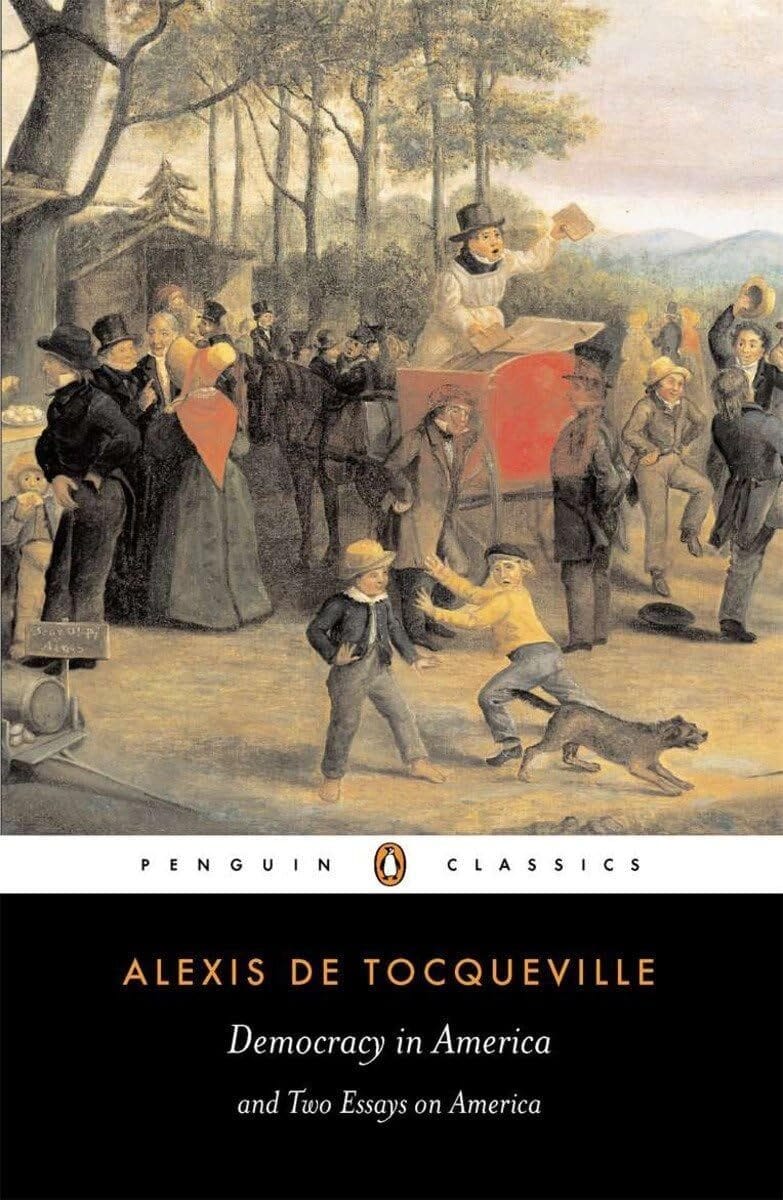
There’s a third failure mode, distinct from Fromm’s framework but related to it. Alexis de Tocqueville identified it in the 1830s, watching American democracy with the eyes of a French aristocrat who had seen what revolution could do.
Tocqueville admired American energy, the voluntary associations, the local self-governance that seemed to make democracy work. But he also saw a vulnerability. He called it “[soft despotism](https://prometheusdispatch.com/p/the-seduction-of-control).”
Soft despotism doesn’t look like tyranny. There are no secret police, no gulags, no charismatic dictators. Instead, there’s a gentle, paternal state that provides for every need, removes every friction, makes every decision just a little easier to outsource. Over time, citizens stop exercising the muscles of self-governance. They become dependent, passive, content to be managed. They still have rights on paper. They’ve lost the capacity to use them.
It would be like the authority of a parent if, like that authority, its object was to prepare men for manhood; but it seeks, on the contrary, to keep them in perpetual childhood. -Alexis de Tocqueville
This is a different escape than authoritarianism. Atrophy of the self rather than submission to a strongman. The freedom is still technically there. The person who would exercise it has been slowly hollowed out.
I think about this when I see how much we’ve outsourced to algorithms, to experts, to platforms that curate our choices down to manageable sets. When I see how much of political discourse is spectacle, entertainment rather than deliberation.
I don’t have a prescription here. That would go against the point.
The publication I’m building exists because I think we’re in a period where the choices matter, where what emerges on the other side of the current upheaval depends on whether enough people can bear the weight of thinking for themselves. Because they’ve looked at the escape routes and decided the cost is too high.
Fromm believed the only healthy response to freedom’s burden was what he called “positive freedom”: not freedom from constraint but freedom to create, to love, to express your genuine self in the world. This requires strength. It requires what [Jung would call individuation](https://prometheusdispatch.com/p/the-shadow-of-the-republic): becoming a whole person who can tolerate uncertainty because they know who they are.
That’s harder than it sounds. The pull toward certainty is real. The relief of letting someone else decide is real. I feel it myself, more often than I’d like to admit.
But the alternative (the escape into authority, into conformity, into the slow atrophy of the self) has costs that aren’t obvious until you’ve already paid them. Free societies are rare because the people capable of sustaining them are rare. Freedom asks something of us that we have to choose, every day, to give.
The question isn’t whether we’re susceptible to the escape. We are.
The question is what we do next.
Sources and Inspiration
The Revolt of the Public - Martin Gurri
Private Truths, Public Lies - Timur Kuran
Escape From Freedom - Erich Fromm
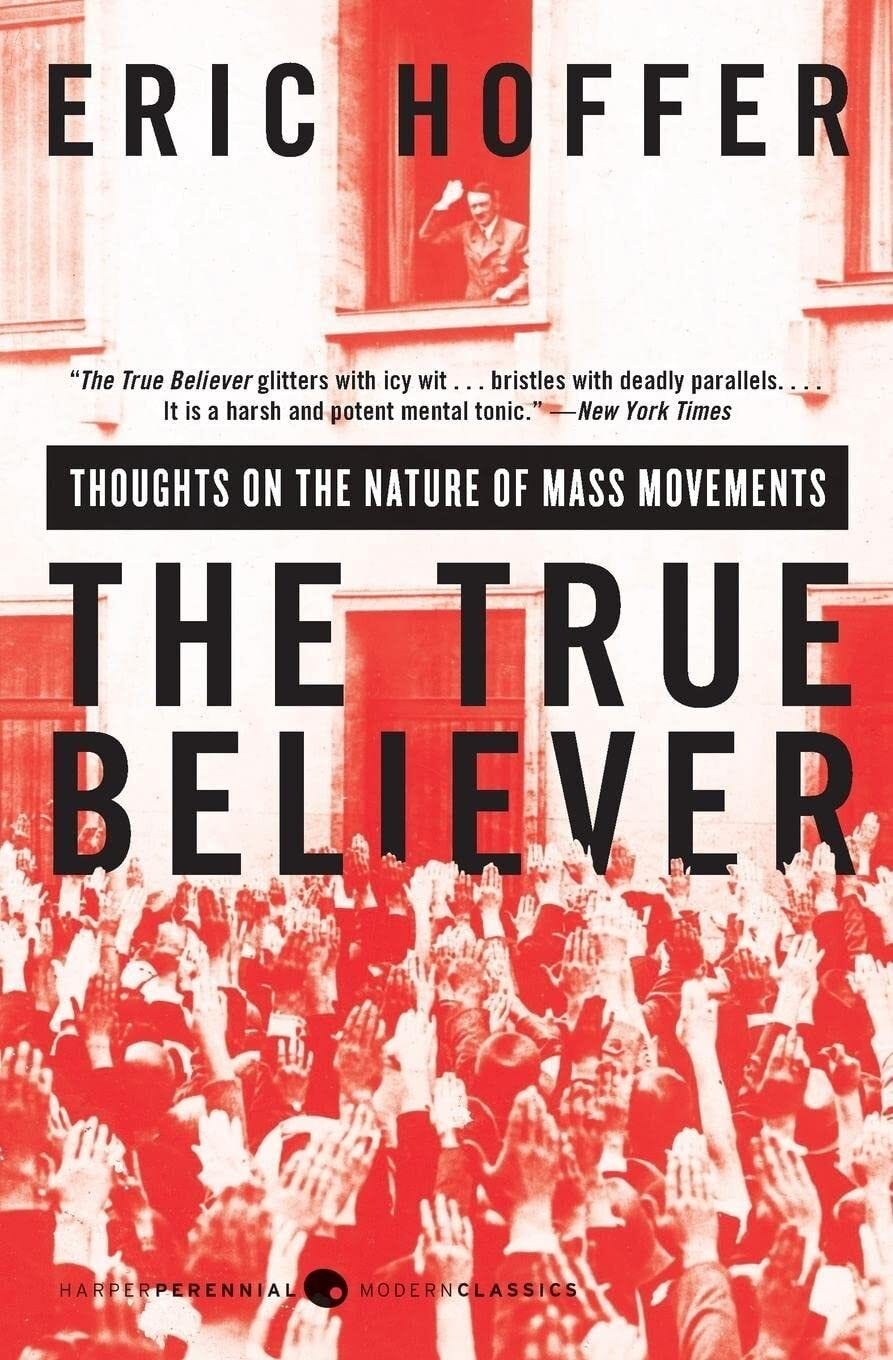
The True Believer - Eric Hoffer